
By Brett Franks, Co-Founder / Lead Strategist at Elite AEO Labs
Your Google rankings are holding. Traffic looks stable. And somewhere in the back of your mind, you’re wondering whether all this AI search disruption actually applies to your firm yet – or whether you have a few more months to watch and wait.
That question is the most expensive one in your marketing stack right now.
Direct Answer
The right time to address AEO blockers is before your AI visibility gap becomes measurable – not after. Structural problems like missing entity signals, unresolved schema errors, and weak authority architecture compound silently. By the time you notice you’re absent from AI-generated answers, the gap has been widening for months. Acting early costs far less than catching up.
Key Takeaways
• AEO blockers are structural problems – missing entity signals, schema errors, authority gaps – that prevent AI systems from recommending your business even when your content is strong
• Waiting until you notice a traffic drop is waiting until the damage is already done; AI visibility loss precedes traffic loss by months
• The AEO Blocker Audit is the correct first move – it identifies which specific structural problems exist before you spend time or budget fixing the wrong things
• Firms in moderate to high-competition markets have the least margin for delay; competitors who resolve blockers first get cited first, and AI systems are slow to redistribute that trust
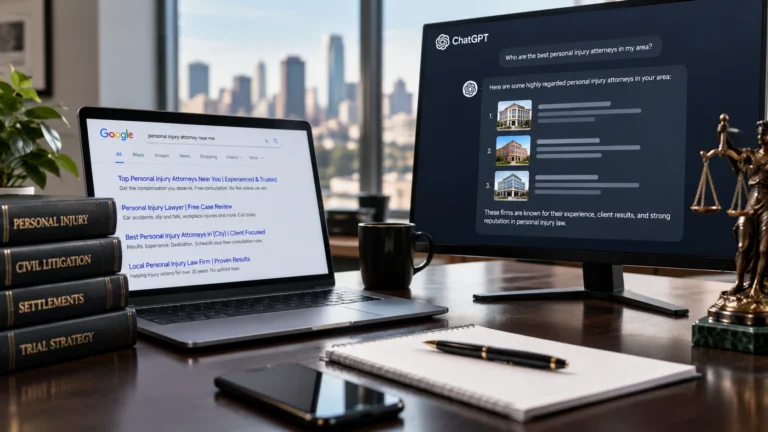
• Traditional SEO rankings are not a proxy for AI visibility – a firm can rank #1 in Google and be completely absent from AI-generated answers
What Exactly Are AEO Blockers, and Why Don’t Rankings Warn You About Them?
An AEO blocker is any structural, technical, or authority-related signal that prevents an AI system from confidently recommending your business in a generated answer. Not a content problem. Not a keyword gap. A structural problem that makes your firm invisible to AI systems regardless of how well your pages rank.
This is the first thing most marketing directors get wrong about timing. They treat AI visibility as a future concern and Google rankings as the present reality. But AI systems don’t read rankings. They read entity signals, structured data, authority architecture, and cross-platform consistency. A firm that’s spent years building domain authority in Google has not automatically built the signals AI systems require.
Ranking well in Google and being recommended by AI are two separate competitions – and most firms are only playing one of them.
The practical consequence: you can be #1 in Google for your primary service keyword and completely absent from every ChatGPT, Perplexity, or Google AI Overview response on that same topic. That’s not a future risk. That’s the current state for a significant share of firms who haven’t addressed their AEO infrastructure.
Understanding how AI search engines recommend businesses is the starting point for understanding why your rankings don’t translate.
Why Do Firms Keep Waiting – and What Does That Actually Cost?
The waiting instinct is rational on its surface. You see stable traffic. You see rankings holding. You don’t have a measurable AI visibility problem yet – or at least not one you can see in your analytics.
Here’s the mechanism that makes waiting dangerous: AI systems build trust in sources incrementally, through repeated exposure to consistent, structured, authoritative signals across multiple platforms. Once a competitor’s entity profile is established as a trusted source in an AI system’s architecture, displacing it requires not just matching their signals but exceeding them – and doing so long enough that the AI redistributes confidence. That redistribution is slow.
A common scenario: a mid-size professional services firm in a competitive metro market watches a competitor start appearing in AI-generated answers for their core service category. They decide to address their AEO blockers six months later. By that point, the competitor has six months of compounding authority advantage. The firm that waited isn’t starting from zero – they’re starting from behind.
The difference between AI search and traditional SEO explains exactly why this compounding dynamic doesn’t work the same way as keyword rankings, where a single content update can shift positions quickly.
The AEO Timing Signal Framework: Four Conditions That Tell You to Act Now
Most timing decisions in marketing are genuinely ambiguous. AEO timing isn’t. There are four specific conditions where waiting stops being a judgment call and becomes a quantifiable mistake.
The AEO Timing Signal Framework identifies these four triggers:
1. You’re ranking in Google but not appearing in AI Overviews or AI-generated answers for your primary service terms – this is the clearest signal that structural blockers exist, not content gaps
2. A competitor in your market has begun appearing in AI-generated answers for terms you own in traditional search – the window to close that gap is open now and narrowing
3. You’ve made recent changes to your website, rebranded, or restructured your service pages – each of these can break entity signals that were previously intact
4. You’re entering a new market or service category – establishing AI visibility from the start costs a fraction of what it costs to recover it after a competitor claims the space
Use this framework when deciding whether to prioritize AEO work. If two or more conditions apply, the decision is already made.
The complete AEO services package addresses all four of these conditions through a structured sequence – audit first, then technical remediation, then authority architecture.
What Happens When You Run the AEO Blocker Audit First?
The AEO Blocker Audit is the diagnostic step that makes every subsequent decision more accurate and less expensive. It identifies exactly which structural problems are preventing AI visibility – missing or malformed schema markup, entity disambiguation issues, authority signal gaps, cross-platform inconsistencies – before you spend time or budget on remediation.
Consider a typical case: a professional services firm runs the audit and discovers three distinct blockers. Their schema markup is present but malformed in a way that prevents AI systems from correctly associating their services with their entity. Their Google Business Profile and website use slightly different business name formats, creating an entity disambiguation problem. And their authority signals are concentrated on one platform rather than distributed across the sources AI systems cross-reference.
None of these problems were visible in their Google rankings. All three were preventing AI recommendations.
The audit creates a prioritized remediation sequence. That sequence matters because not all blockers have equal weight – some prevent AI visibility entirely, others reduce confidence scores incrementally. Fixing the wrong things first wastes months.
Elite AEO Labs builds the AEO Blocker Audit into the onboarding process for exactly this reason. The $1,000 setup fee covers this diagnostic work, so the ongoing optimization is targeted from day one rather than exploratory.
If you want to understand what AEO services actually do for a business beyond the audit, that context helps frame what you’re buying when you engage.
Acting Now vs. Waiting: What the Decision Actually Looks Like
The real comparison isn’t between acting and not acting. It’s between acting now with a structured approach versus acting later under competitive pressure with less margin for error.
| Decision | What You Control | What You Risk | Timeline to Visibility |
| Act now with AEO Blocker Audit | Remediation sequence, competitive timing, authority architecture | Upfront setup investment | Structured – typically months, not weeks |
| Wait until traffic drops | Nothing – you’re reacting | Competitor authority advantage already compounded | Longer – you’re closing a gap, not building |
| DIY without audit | Which fixes you attempt | Fixing the wrong blockers, wasting months | Unpredictable – no diagnostic baseline |
| Ignore AI search entirely | Short-term budget | Cumulative invisibility as AI search volume grows | Irreversible in competitive markets |
The DIY row deserves a direct statement: attempting to resolve AEO blockers without an audit is the same as treating symptoms without a diagnosis. You might fix something. You probably won’t fix the right things. And in competitive markets, the cost of that misspent time is measured in competitor citations, not just wasted hours.
For firms in high-competition metros, the Authority tier pricing at $2,500/month reflects the additional work required to build AI visibility against entrenched competitors – not a premium for the same work.
Who Should Genuinely Wait – and Who Can’t Afford To
There are situations where the urgency is lower. If you’re in a market with no meaningful AI search competition yet, if your service category is highly localized and AI-generated answers aren’t yet the primary discovery mechanism, or if you’re in a pre-launch phase where your entity signals don’t exist to fix – the timeline is less critical.
But “less critical” isn’t the same as “not important.” It means you have a window to build correctly from the start rather than remediate under pressure.
The firms who genuinely can’t afford to wait are those in moderate to high-competition markets where AI-generated answers are already influencing service discovery – law firms, financial advisors, marketing agencies, consultancies, healthcare practices. In those categories, the AI visibility race is already running. You’re either in it or you’re not.
Elite AEO Labs’s Core tier at $1,500/month is specifically designed for firms in moderate markets who need structured AEO work without the full competitive intensity of major metro pricing.
If you’re not sure which category your market falls into, the AEO Blocker Audit answers that question directly – it’s the diagnostic that tells you both what’s broken and how urgently it needs fixing.
If you’re ranking in Google but not appearing in AI-generated answers, the structural problems already exist. The audit is the right next step – not because it’s a sales process, but because you can’t fix what you haven’t diagnosed.
How businesses become a verified source in AI search is the outcome the audit is designed to move you toward – find out exactly what’s preventing your firm from being recommended by AI systems.
Frequently Asked Questions
How do I know if I actually have AEO blockers right now?
The clearest signal is a gap between your Google rankings and your AI visibility – specifically, if you rank well for your primary service terms but don’t appear in ChatGPT, Perplexity, or Google AI Overview responses on those same topics. You can test this manually by querying AI systems the way your clients would. If you’re absent, structural blockers are almost certainly the reason.
How long does it take to see results after fixing AEO blockers?
Honest answer: it depends on the severity of the blockers and the competitiveness of your market. Technical fixes like schema corrections can register with AI systems relatively quickly. Authority architecture and entity signal building take longer – typically several months before you see consistent citation in AI-generated answers. Anyone promising specific timelines without an audit first is guessing.
Can’t I just update my schema markup and call it done?
Schema is one signal among many. AI systems cross-reference entity data across your website, Google Business Profile, third-party directories, industry citations, and structured data simultaneously. A schema fix that isn’t supported by consistent entity signals elsewhere gets limited weight. The audit identifies which combination of signals is actually missing – schema alone rarely resolves the full picture.
Is this something my current SEO agency can handle?
Most traditional SEO agencies are optimized for Google rankings – keyword research, backlink building, on-page content. AEO work requires a different diagnostic framework and a different understanding of how AI systems evaluate authority. If your agency hasn’t specifically addressed entity signals, knowledge graph optimization, and AI citation architecture, they’re likely not equipped to resolve AEO blockers even if they’re willing to try.
What’s the difference between the Core and Authority tiers?
The Core tier at $1,500/month is designed for firms in moderate-competition markets where AI visibility gaps exist but the competitive pressure is lower. The Authority tier at $2,500/month is for high-competition markets – typically large metros or categories where multiple well-resourced competitors are actively building AI visibility. Both include the $1,000 setup fee for the AEO Blocker Audit. The difference is the depth of authority architecture work required to compete.
What if my competitors are already appearing in AI-generated answers?
Then the window is open and narrowing. AI systems build trust incrementally, and competitors who establish authority first benefit from that compounding advantage. You’re not locked out permanently, but you are starting from behind – which means the remediation work has to close a gap, not just build from neutral. The sooner the audit runs, the more accurately you can assess how large that gap actually is.
Does fixing AEO blockers hurt my existing Google rankings?
No – and this is a common concern worth addressing directly. AEO optimization works on entity signals, structured data, and authority architecture, not on the on-page content elements that drive Google rankings. In most cases, the work is complementary: stronger entity signals and more consistent structured data tend to support Google’s understanding of your site as well. The two aren’t in competition.
If you’re watching AI search grow and wondering when the right time to act is, the answer isn’t a calendar date. It’s the moment you recognize that your current rankings don’t protect you in the search environment that’s replacing them.
Schedule a consultation with Elite AEO Labs to find out what’s standing between your firm and AI-generated recommendations.
About the Author
Brett Franks is the Co-Founder and Lead Strategist at Elite AEO Labs, where he specializes in Answer Engine Optimization and Generative Engine Optimization for professional service firms navigating the shift from traditional search to AI-driven discovery. His work focuses on semantic entity building, structured data architecture, and securing brand visibility within AI knowledge graphs. Elite AEO Labs helps businesses in moderate to high-competition markets adapt to AI search before their competitors do.